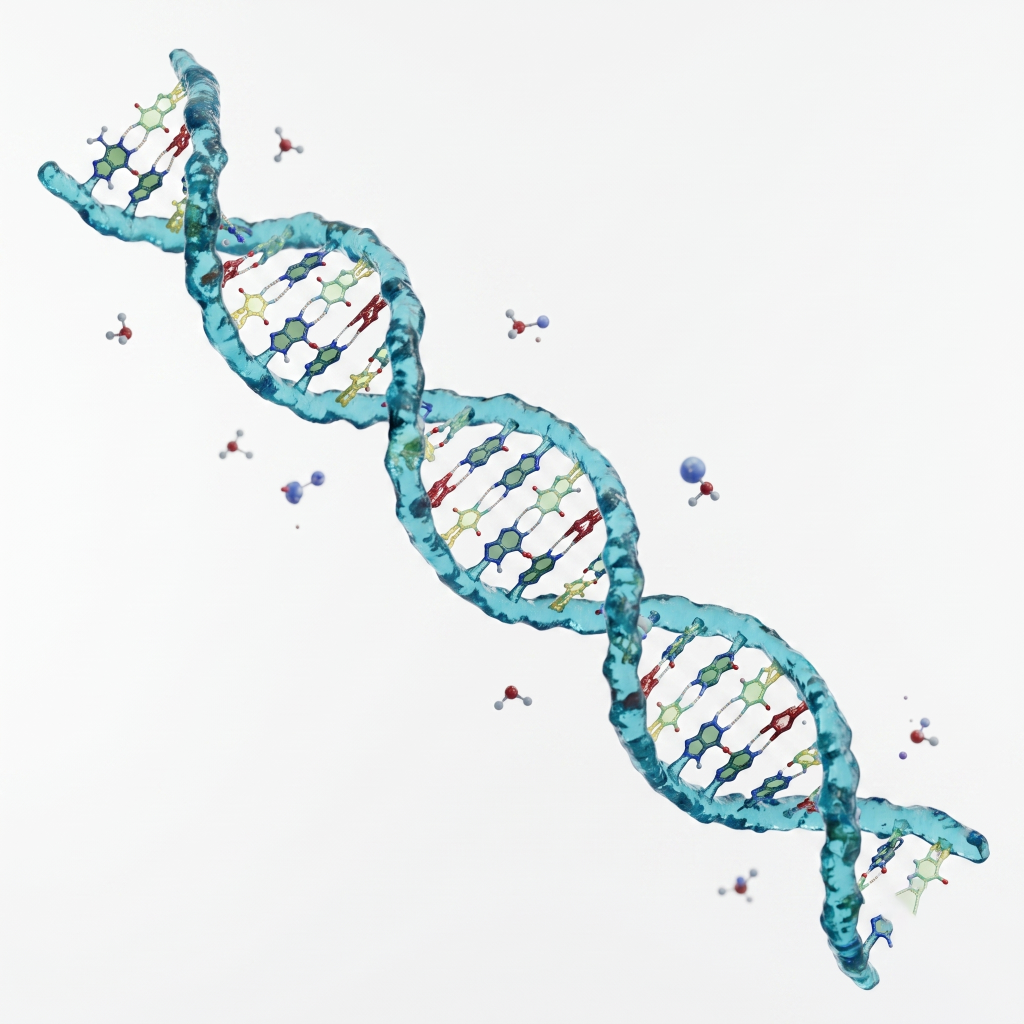
The BRCA1 and BRCA2 genes are named after the acronym for BReast CAncer, since it has long been established that a defect in either of these two genes typically leads to breast or ovarian cancer at some point in our lives. Since the link between mutations in these genes and breast and ovarian cancer was discovered, thousands of studies have been conducted to determine exactly which mutations cause a genetic defect and which ones have a combined or partial effect, as shown in Table 01. In the case of the BRCA1 gene, approximately 1,650 mutations and variants (including deletions and duplications) have been reported, and 1,730 for BRCA2. All of these show a very strong correlation with breast and ovarian cancer.
Scroll horizontally to view all columns →
| Type of cancer | General population risk | Risk from mutations | |
|---|---|---|---|
| BRCA1 | BRCA2 | ||
| Mom | 12% | 55–72% at age 70 | 45–69% |
| Contralateral breast | 2% | 20–30% | 40–50% |
| Ovarian | 1–2% | 39–44% | 11–17% |
| Male mother | 0.1% | 1–2% | 6–8% |
| Prostate | 6% for people aged 69 and older | 21% at age 75 29% at age 85 | 27% at age 75 60% at age 85 |
| Pancreatic | 0.5% | 1–3% | 3–5% at age 70 |
| Cutaneous and Ocular Melanoma | 1.6% | No data | High risk (inconclusive data) |
When there is a prevalence in the family, Especially with these two types of cancer, it is important to ask whether the origin it could be genetic y hereditary. Knowing whether we have any mutation This is very important information in a way preventive, since, to begin with, we'll have more awareness and we'll have a better chance of a early detection in case you ever develop it; Second, there are currently therapies that work for better or worse depending on which mutations are present, so understanding our genetics, our biographical information, can help us improve by a positive outlook in a certain way exponential y significant.

There are different types of tests available on the market for detecting mutations in these genes. There are tests accessible economically, but those tests only analyze the most common mutations. The recommendation by the experts is a whole-genome sequencing from both genes, so you'll be able to see, in each specific case, all the mutations present and what steps can be taken.
Scroll horizontally to view all columns →
| Gen | Percentage of patients diagnosed with breast or ovarian cancer who have mutations | Proportion of variants detected by sequencing / indel detection | |
|---|---|---|---|
| Sequencing | Indel Detection | ||
| BRCA1 | 66% | 87–89% | 11–13% |
| BRCA2 | 34% | 97–98% | 2–3% |
In the Table 02 shows us a comparison between the detection by full gene sequencing and another for the early detection and from insertions/deletions more traditional. The latter can be done using the methods of MLPA, Quantitative PCR o chromosomal microarrangement.
In conclusion, the complete sequencing of a gene—in this case, BRCA1 and BRCA2—will be of higher profit In cases like this, where Any mutation is significant and not just the most common o well-known. Although the main disadvantage which the sequencing is his cost, we must take into account the quantity and quality from information that it offers us. Because having the complete information could be the difference.